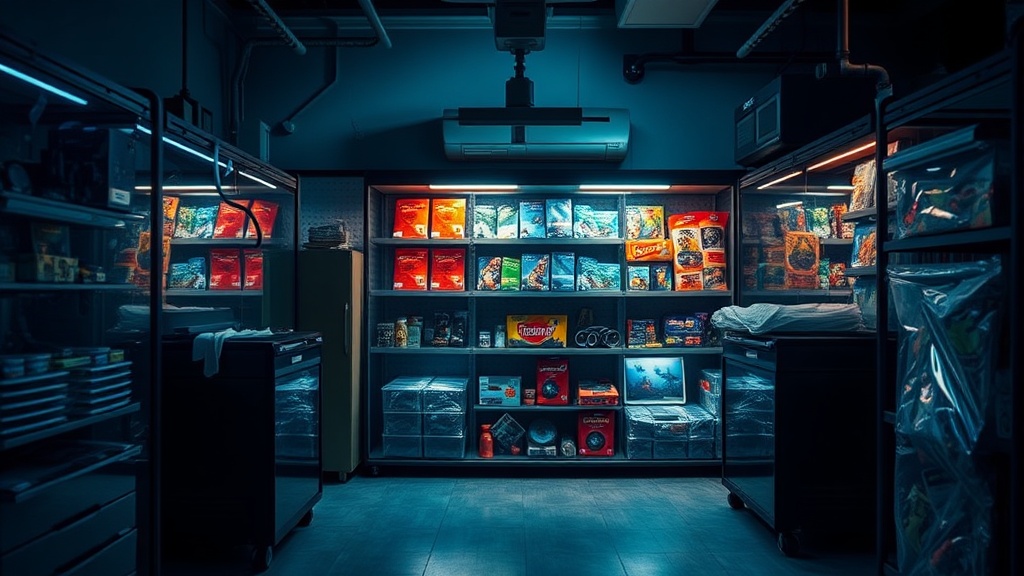
Safeguarding Your Investment: Environmental Control for Sealed Game Collections

Optimizing the Environment: A Guide to Preserving Your Sealed Game Collection
This guide will illuminate the critical environmental factors affecting the longevity of your sealed video game collection and provide actionable strategies to mitigate common risks. We’ll discuss the unseen forces that can degrade your prized possessions—from temperature fluctuations and humidity swings to harmful light exposure and air quality—and detail how to construct a protective environment that ensures their physical integrity for decades to come. Understanding these elements isn't just about preserving value; it's about safeguarding history, keeping the condition of these artifacts as pristine as possible, mirroring the care afforded to any museum-quality collectible.
What environmental factors truly impact sealed video games?
Sealed video games, at their core, are delicate assemblies of plastic, paper, and various inks. Each component reacts differently to its surroundings, and over time, environmental stressors can lead to irreversible damage. The primary culprits are temperature, humidity, light, and air quality—all working in concert to slowly, or sometimes rapidly, compromise your collection.
Temperature stability is perhaps the most obvious concern. Extreme heat can warp plastic cases, degrade shrink wrap, and even cause discs inside to develop “disc rot” or delamination. Conversely, very cold temperatures can make plastics brittle and prone to cracking. More damaging than either extreme, however, are rapid temperature fluctuations. These constant shifts cause materials to expand and contract, placing immense stress on the seals, cases, and internal components. Imagine a sealed game stored near a poorly insulated window or an air vent—it’s constantly battling these thermal assaults.
Humidity is another silent destroyer. High humidity encourages mold and mildew growth, especially on cardboard packaging and paper inserts. It can also make plastic shrink wrap feel tacky, encourage chemical reactions within the plastic itself, and lead to paper warping, discoloration, and even foxing (those tiny reddish-brown spots). On the other hand, extremely low humidity can make paper and plastic brittle, increasing the risk of cracking or tearing. The sweet spot for most archival materials, including sealed games, typically sits between 30% and 50% relative humidity. Consistently high humidity is particularly problematic for cardboard boxes that house many older games, as it can weaken the adhesive and fibers. For detailed insights into preserving archival materials, the