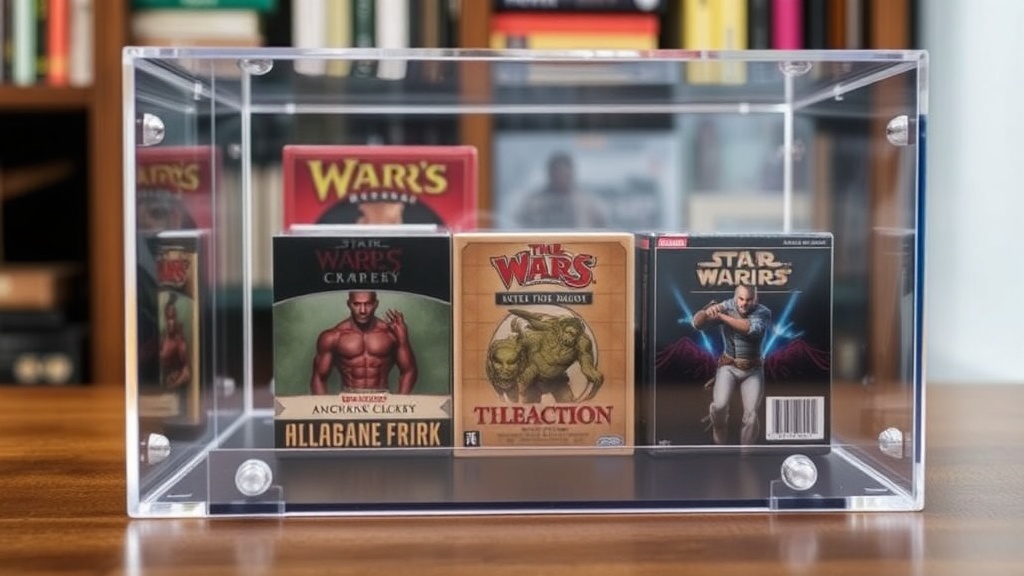
Choosing the Right Acrylic Case for Your Sealed Game Collection

Why does the type of display case matter for sealed games?
Have you ever looked at a pristine, factory-sealed copy of a classic RPG and realized it looks slightly dull under standard room lighting? It's a common frustration for collectors. You've spent years tracking down that specific version—maybe it's a high-grade Nintendo 64 title or a rare Saturn release—and now you want to show it off. However, not all display solutions are created equal. The wrong choice doesn't just look bad; it can actually cause long-term issues for your investment if you aren't careful.
Displaying sealed games involves a delicate balance between visibility and protection. You aren't just putting a plastic box on a shelf; you're housing a piece of history. The material of the case affects how light interacts with the shrink wrap and how much air circulation occurs around the box. If you use a low-quality plastic, you might see yellowing or even structural bowing over time. This post breaks down the various options available so you can decide which one fits your specific collection needs.
Most collectors start with basic plastic bins, but as your collection grows, you need something more sophisticated. You want a way to showcase the art while keeping the physical object safe from dust and physical contact. Whether you're looking to display a single high-value trophy piece or a dozen common titles, the method you choose will dictate how your collection ages. We'll look at acrylic, custom-fit cases, and general display techniques to ensure your games stay looking as good as the day they left the factory.
What are the best materials for protecting high-value games?
Acrylic is often the gold standard for collectors. It's clear, looks much more professional than standard polystyrene, and has a weight to it that feels premium. When you're looking at high-end displays, you're usually looking at high-grade acrylic. This material is much more resistant to scratches and has better optical clarity. If you're displaying a game with vibrant cover art, you want a material that won't distort the colors or add a yellowish tint over time.
There are a few different tiers of materials you'll encounter in the market:
- High-Grade Acrylic: This is the best for long-term display. It stays clear and provides excellent UV protection.
- Standard Plastic: Often cheaper and easier to find, but it tends to scratch easily and can look much cheaper under direct light.
- Custom-Molded PET: Often used for single-game displays, these are very precise but can be harder to find for non-standard box sizes.
One thing to keep in mind is the thickness of the material. A thin, flimsy case might look fine at first, but as your collection grows, the weight of the games can cause the sides to bow inward. This is especially problematic for sealed games, as the pressure can actually deform the cardboard box inside the plastic wrap. Always look for a thickness that matches the scale of your collection. If you're displaying a larger item, like a boxed PC game or a specialized collector's edition, don't skimp on the structural integrity.
How do I prevent UV damage on my sealed games?
One of the biggest enemies of a sealed collection is light. Even if your games are protected by shrink wrap, that wrap is often quite thin. UV rays can penetrate the plastic and hit the cardboard directly, leading to fading or even "sun bleaching." This is a nightmare for collectors who want to maintain the original color saturation of their boxes. You might see a bright blue sky on a game cover turn into a pale, washed-out color after just a few months in direct sunlight.
To combat this, you should look for cases that specifically mention UV resistance. While no plastic is 100% opaque, high-quality acrylic can filter out a significant portion of harmful rays. If you're displaying your games in a room with large windows, this becomes even more vital. Even if the case is UV-resistant, I'd suggest avoiding direct sunlight altogether. A well-lit room with indirect light is far better for the longevity of your items than a bright, sunny corner of a living room.
It's also worth noting that heat can be just as damaging as light. A display case that is tucked away in a corner with no airflow might trap heat, which can lead to the "shrink wrap" tightening too much or even melting slightly against the box. This is why air circulation is a factor many people overlook. You want a display that allows for some level of temperature stability. If you're using a glass or acrylic cabinet, make sure it isn't sitting directly against a heater or a cooling vent.
Are custom-fit cases worth the extra cost?
This is a question that comes up frequently in collector circles. If you have a collection of standard-sized games, like SNES or Genesis titles, buying a generic acrylic case is easy. However, if you collect more niche or irregularly shaped items, you might find that standard cases don't quite fit. This is where custom-fit options come into play. While they are definitely more expensive, the benefits are hard to ignore.
| Type of Case | Best For | Pros | Cons |
|---|---|---|---|
| Standard Acrylic Box | Common SNES/N64 games | Affordable, easy to find | Not perfect for larger items |
| Custom Acrylic Case | High-value/Rare items | Premium look, perfect fit | Higher price point |
| Bulk Display Bins | Large-scale storage | Keeps things organized | Not great for single-item display |
For a single, extremely rare item—say, a high-grade sealed copy of a classic—a custom-fit case is almost a requirement. It provides a sense of permanence and tells anyone looking at it that this is a piece of value. It also ensures that the game isn't rattling around inside a box that's too large. A snug fit (without being too tight) prevents the game from shifting, which reduces the risk of the box corners getting dinged or the wrap getting scuffed against the sides.
If you're building a massive collection, you might want to mix and match. Use standard, affordable cases for your bulkier, less expensive items, and save the high-end, custom-fit displays for your "crown jewels." This is a practical way to manage your budget while still creating a visually stunning display. Remember, the goal is to show off your collection, not just store it. A well-planned display system makes a huge difference in how your collection is perceived by guests and fellow collectors alike.
Before you make a purchase, check out professional grading sites like CGC or other high-end grading resources to see how they handle their presentation. While they focus on the grading aspect, the way they present their items can give you a clue about what high-end protection looks like. Also, if you're looking for specific display materials, sites like IKEA often have glass or acrylic solutions that can be adapted for gaming-specific uses, though you'll want to measure your items carefully first.
Does the weight of the case affect the game's stability?
A final thing to consider is the weight of the display itself. If you're using heavy acrylic cases, they can add up quickly. If you're placing these on a standard bookshelf, you need to ensure the shelf can handle the load. A shelf that bows under the weight of heavy acrylic cases can actually tilt the games, which might cause them to fall or even tip over if they aren't secured. It's a small detail, but it can lead to a broken seal or a dented corner if you aren't paying attention.
I've seen many collectors make the mistake of buying beautiful, heavy cases and then placing them on thin, particle-board shelving. The result is often a slow-motion disaster as the shelf begins to sag. Always check the weight capacity of your furniture before you start filling it with heavy-duty displays. If you're planning a massive collection, you might want to consider more permanent solutions like custom shelving or heavy-duty-rated display cabinets. It's better to be safe than to lose a valuable piece of your collection to a simple structural failure.